Zone: 5 to 9
Soil: Sand to clay
Light: Full sun to shade
Bloom colour: White
Bloom period: Early summer
Height: 8 inches
Moisture: Dry to medium
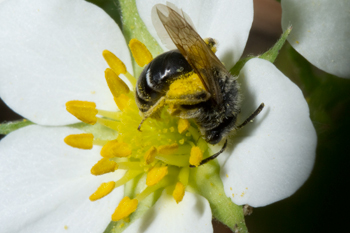
Attracts: A number of bees and pollinating flies when in flower; birds and mammals when in fruit.
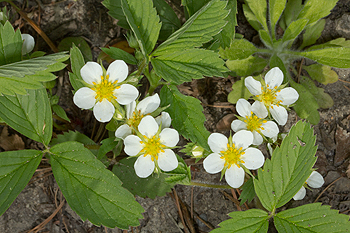
Notes: There are 2 species commonly available. One for sun and the other for shade. They both flower in spring, but play different ecological roles. To get the most out of these plants, it is best to have them cover large patches in the garden. It is also an excellent plant to prevent soil erosion on slopes. Both plants have toothed leaves of three and spread via runners.
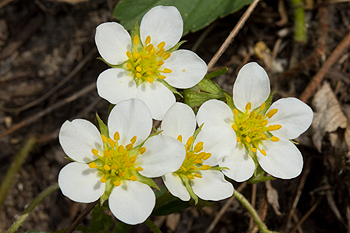
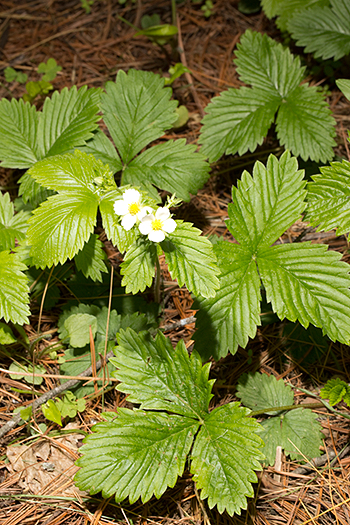
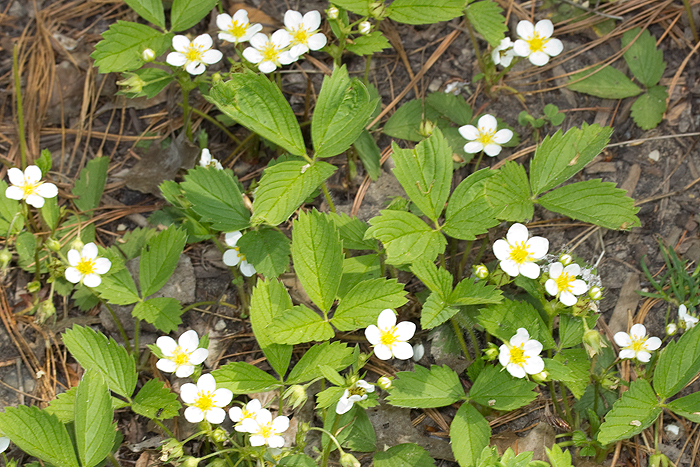
Fragaria virginiana, Wild strawberry, is gynodioecious. This means that there are plants that produce flowers which are only female with no anthers to produce pollen. The other plants have both female and male parts. I never get strawberries from my plants, which are all hermaphroditic. This is because hermaphroditic flowers tend towards being male and producing abundant pollen even though they have a pistillate structure that might be capable of producing fruit. To sex your plants, see if there are twenty or so stamens growing on the flower.
If you don't have the room for a huge patch, male/hermaphrodite plants are arguably better for wildlife because they produce more nectar than the female flowers as well as a high protein pollen. The females of course produce the fruit which feeds birds and mammals as well as the seeds to spread elsewhere.
F. virginiana is a groundcover for sunny areas and it acts as a living mulch by cooling the soil and increasing the moisture retention. Easily identified by its toothed leaves of three, it is a rampant spreader. It sends out runners over 2 feet long, but its low height prevents it from dominating other plants. Since the runners are at the surface, it is not too much trouble to pull them out. My plants happily coexist with trout lily and a range of other sun-loving plants.
F. vesca is for shady moist soils, but it can handle a drier medium quite well. All the flowers are truly hermaphrodite, producing both pollen and strawberries. The strawberries are not as sweet as those of F. virginiana, but they are more prominent as the fruiting stalks protrude above the leaves. Compared to F. virginiana, this species spreads more slowly and takes longer to flower, but it is greatly appreciated in my garden as a flower that produces fruit in light shade. |